


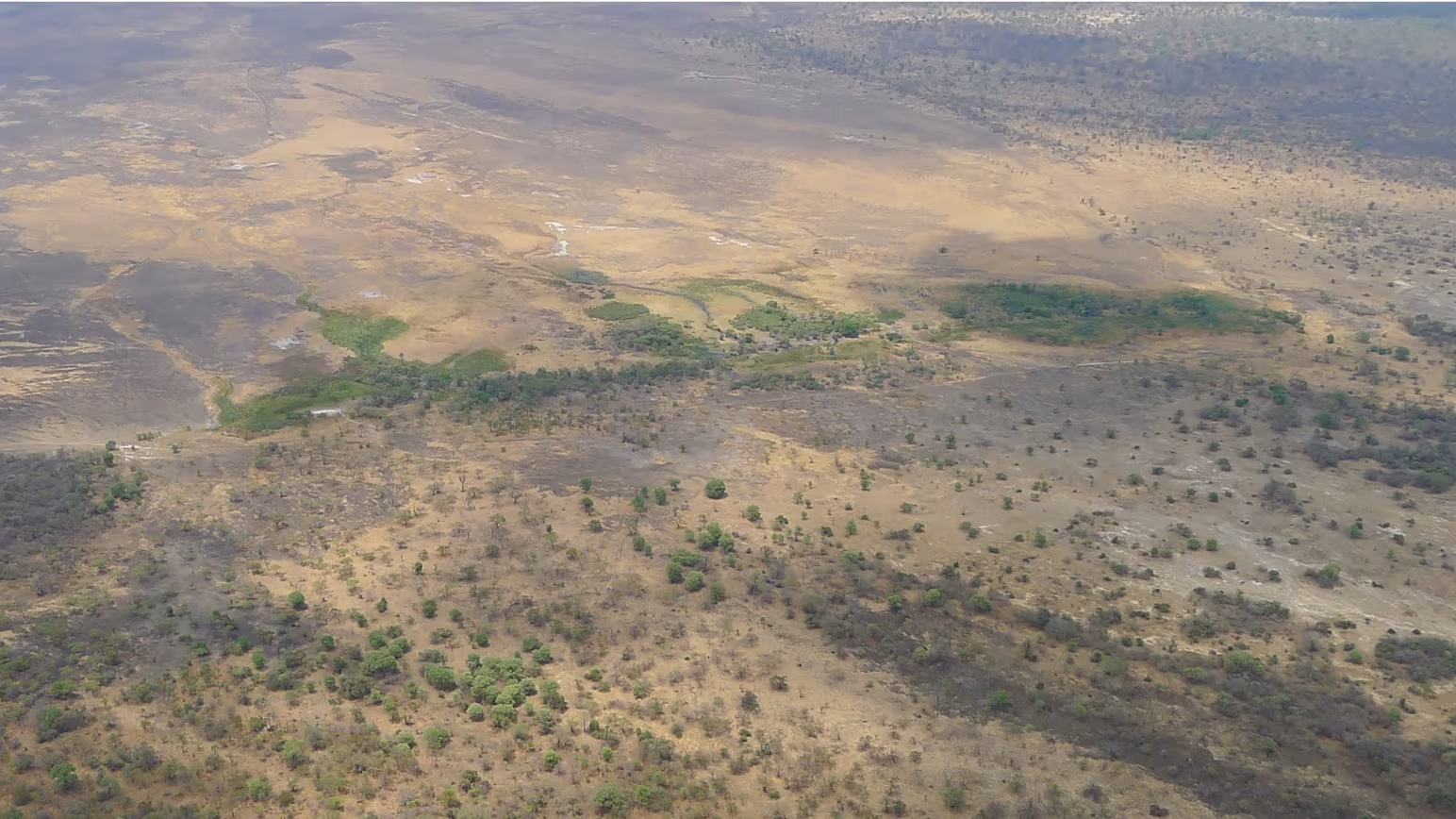
Sub-Saharan Africa could split up in a few million years, and scientists believe they might be witnessing the early stages of this geological process.
The split would occur along the Kafue Rift, which is part of a roughly 1,500-mile-long (2,500-kilometer) rift line spanning from Tanzania to Namibia. A rift is a crack in Earth’s crust that disturbs the surface and can cause sinking land and earthquakes. Thousands of rifts exist around the world, and while the majority are inactive or dead, they can occasionally reactivate.
Geologists thought the Kafue Rift was long dead. But some experts now say it has shown signs of activity in the past few decades. Growing evidence is raising suspicion that the feature could be turning into a new continental rift — and could eventually become a new boundary between tectonic plates, creating a brand-new sea in the process.
Previous studies have collected these clues. Earthquakes too faint to be felt by people but strong enough to be picked up by instruments, increased underground temperature, and minute changes in the elevation of the ground spotted with satellites all suggest that the area may be tectonically active.
Now, a new study published Monday in the journal Frontiers in Earth Science goes one step further. “We have the first geochemical data from this area,” said Rūta Karolytė, who led the study when she was a postdoctoral research fellow at the University of Oxford in England. “That’s quite a different line of evidence that really strengthens the idea that we have rift activity in the area.”
Read More from CNN